EU Pay Transparency Directive analysis

What does it do?
A compliance dashboard that measures your organisation's gender pay gap against EU Directive 2023/970 and surfaces exactly what's needed to evidence or close the gap — overall compliance status, the roles and individuals driving it, and concrete next steps mapped to the relevant articles of the Directive.
What's inside?
The view covers the full compliance picture, from org-wide metrics to individual flags:
- A headline compliance verdict (compliant or non-compliant) plus employees analysed and report date.
- A KPI strip showing mean pay gap against the EU 5% threshold, median pay gap, gender split and open action items by severity.
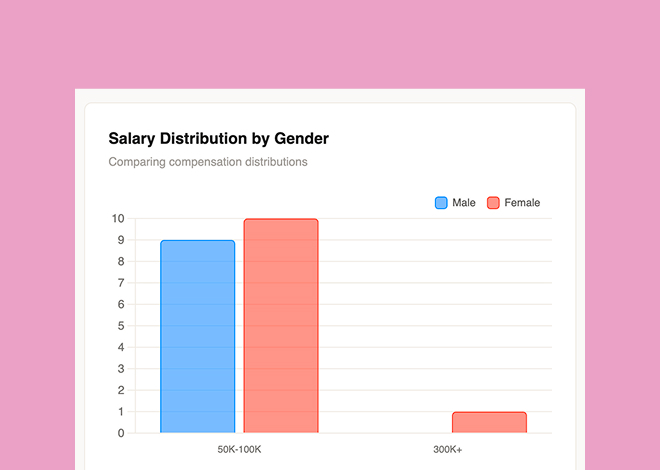
- Charts covering pay gap by job role, pay quartile distribution, pay gap by department and salary distribution by gender.
- A role-level analysis table listing every job role with male/female counts, average pay per gender, the calculated gap, risk level and compliance status under Article 4.
- A pay quartile breakdown showing male/female proportion across four pay bands as required under Article 9.
- A flagged employees list highlighting individuals whose pay deviates significantly from their role group average.
- A prioritised action items section with recommended next steps, each tagged with priority, category, the relevant Directive article and a target deadline.
When should it be used?
Use this view as the central workspace for pay equity compliance under the EU Pay Transparency Directive. It is most relevant when preparing the annual gender pay gap report, when running periodic equal-pay audits, when designing or refreshing the company's pay structure to ensure gender-neutral criteria (Article 4), and when formulating salary information that must be disclosed to candidates and employees (Articles 5 and 7). It's also the right place to look before merit cycles and promotion rounds to flag at-risk roles or individuals, to brief leadership on compliance posture, and to track remediation progress against deadlines.