Manager directory

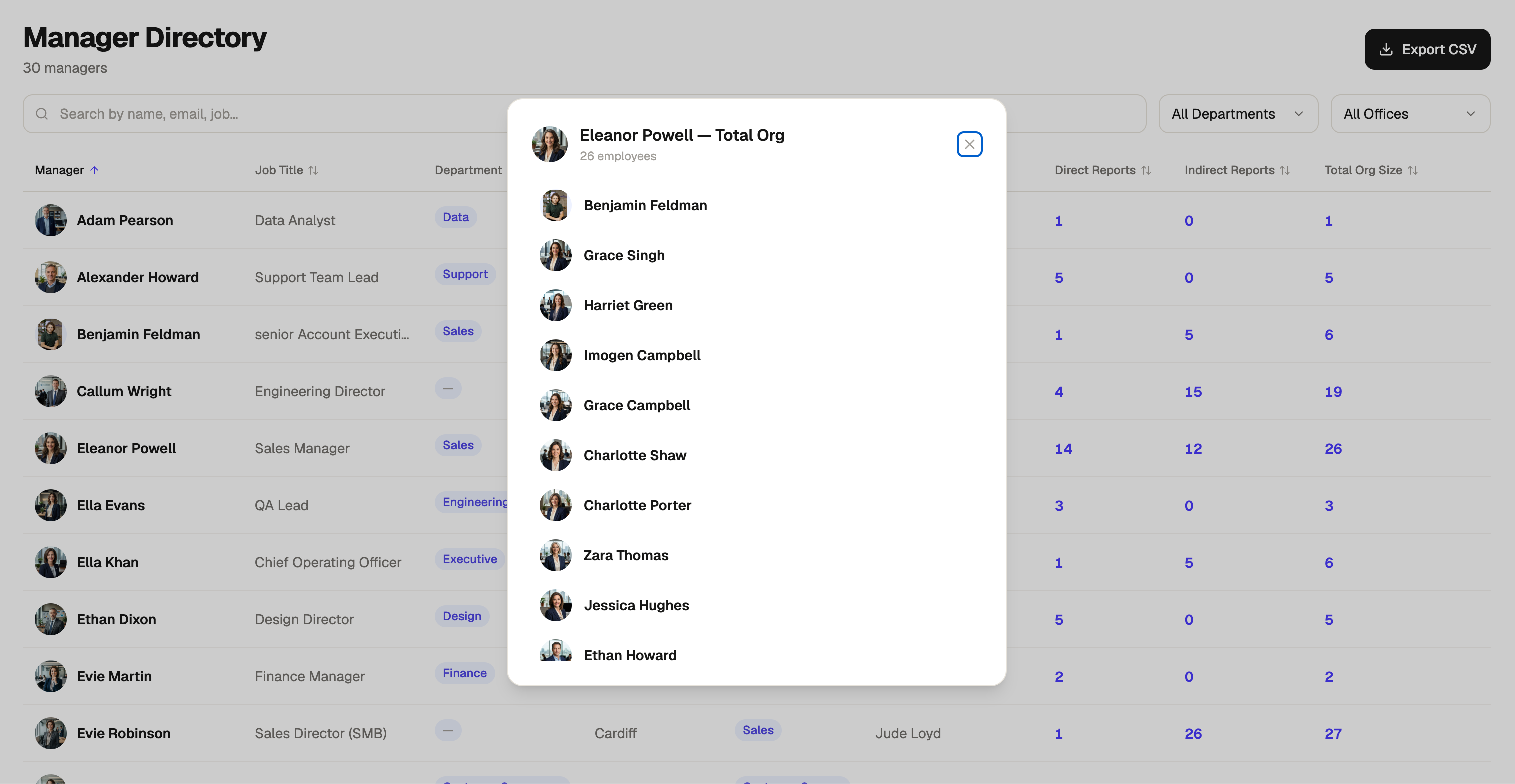
What does it do?
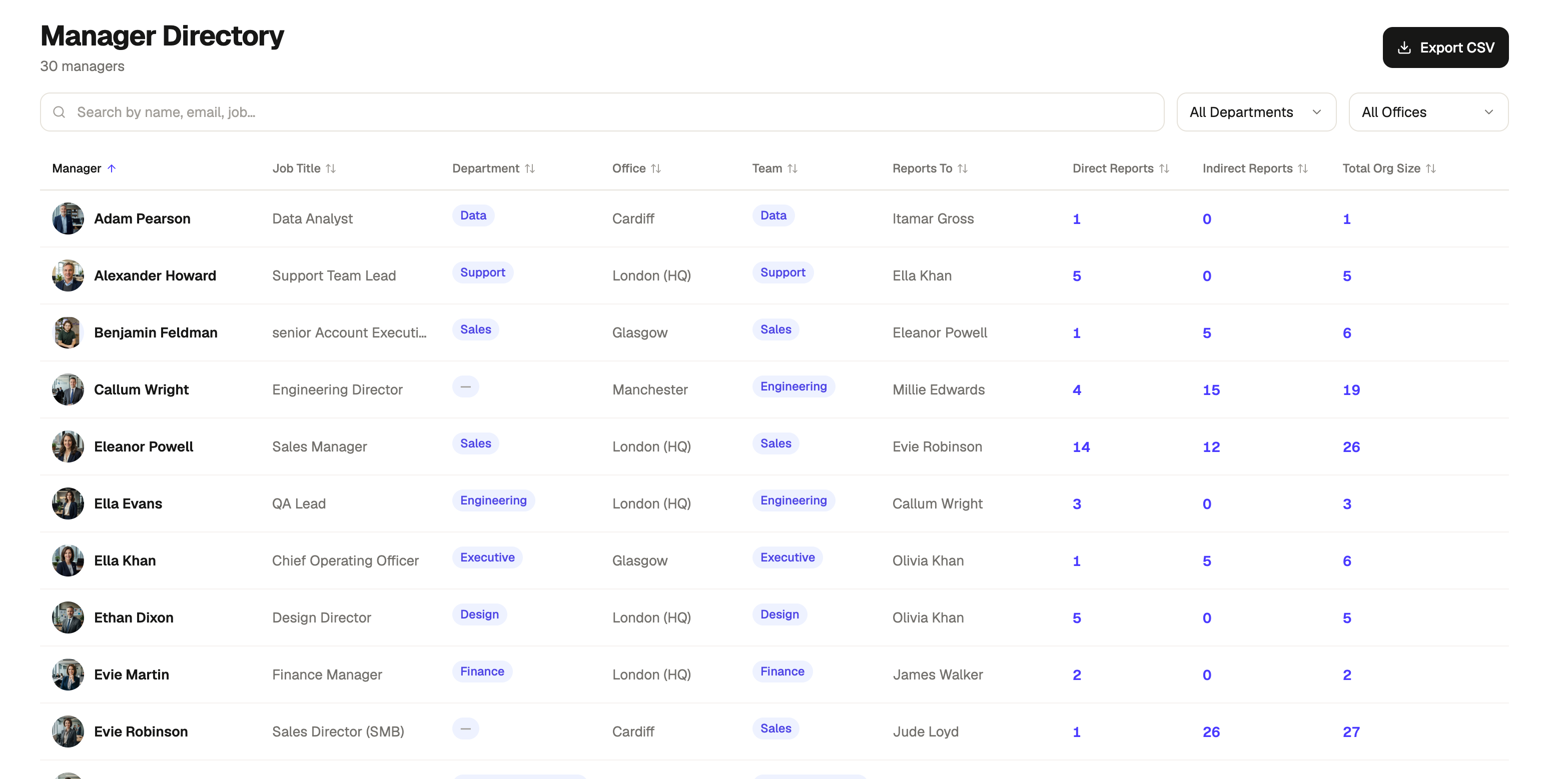
A management layer view that filters your org down to people managers and shows each one's span of control at a glance. Direct reports, indirect reports across the full downstream tree, and total reports, alongside title, office, reporting line, and start date. It turns the reporting hierarchy into a flat, rankable list so you can see who carries the largest spans, who has deep versus wide teams, and how management responsibility is distributed across the org.
When should it be used?
Whenever you need a management layer view rather than the full org chart. Most useful when reviewing spans of control during org design or a reorg, spotting managers who are overloaded or thinly stretched, prepping headcount and succession conversations, or producing a clean manager list for leadership. The CSV export makes it easy to drop the manager layer into a deck or planning spreadsheet.
What's inside?
- A summary line showing how many managers there are out of total headcount and total employees in the org.
- A search box and office filter to scope the directory to exactly who you need.
- A sortable, adjustable table with one row per manager covering avatar and name, job title, office, reporting line, direct reports, indirect reports, total reports, start date, and email.
- An export CSV button to pull the manager layer out for planning or reporting.